Replacing a water heater in Moore starts with a question many in-town homeowners never have to ask: what fuel is available at this address? Depending on the road, a house here may have natural gas from Piedmont Natural Gas or Greer CPW, a propane tank in the yard, or electricity only.
We install tank and tankless water heaters on all of those fuels, and heat pump water heaters on electric. Before recommending one, we look at the fuel, the venting, the space the heater sits in and the size of your household, so the new unit suits the house rather than the catalog.
Moore is unincorporated, so the permit and inspection come from Spartanburg County Building Codes. We pull the permit as part of the job and meet the county inspector when the work is ready.
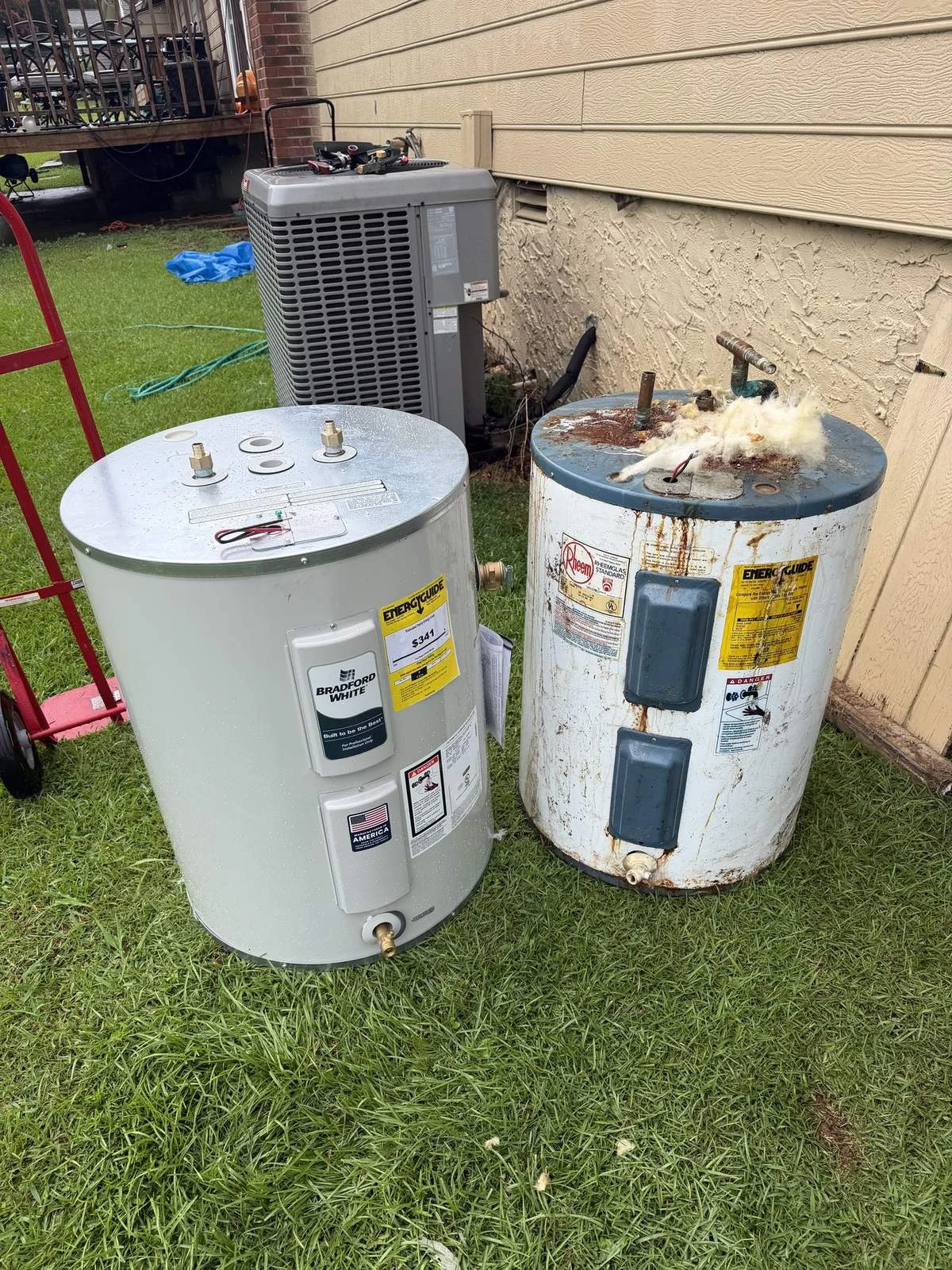
Matching the heater to your fuel
A gas water heater is built for either natural gas or propane, and the burner orifice and gas valve differ between the two. Some models can be converted with a factory kit and many cannot. Checking the rating plate or the model number before purchase avoids buying a heater that cannot legally be connected.
If your road has natural gas, the bill tells you whether it is Piedmont or Greer CPW. The utility does not change how the heater is installed, but it matters when a tankless unit needs more gas than the existing meter can deliver, because that request goes to whoever owns the meter.
On propane, the tank, the regulator and the line to the house all have to keep up with the new heater. Your propane supplier owns the tank and regulator, so we coordinate with them whenever the load goes up.
Heat pump water heaters and Duke rebates
For an all-electric house, a heat pump water heater is a strong replacement for a standard electric tank. It pulls heat from the surrounding air instead of relying on elements alone, so it uses far less electricity for the same hot water.
It needs room to breathe: open air around it, a condensate drain, and a space that does not get very cold. A garage or a large utility room usually works, while a cramped closet usually does not without louvered doors or ducting.
Gas Guys is a Duke Energy Trade Ally, so we can help you get Duke's rebate on a qualifying heat pump water heater. The rebate is for Duke Energy electric customers, and electric cooperatives serve parts of Spartanburg County, so check the name on your power bill before counting on it.
Tankless on a rural lot
We are certified to install and service both Rinnai and Navien tankless water heaters. A tankless unit hangs on a wall, heats water only when a tap opens, and frees up the floor space a tank used.
The trade-off is gas demand. A tankless heater can need several times the gas flow of the tank it replaces, which often means a larger line from the meter or regulator. On a long rural run, pipe length weighs heavily in that sizing, so we measure before we recommend a model.
Tankless units also need their own vent route to outside and, in most homes, a descaling flush about once a year to keep the heat exchanger clean.
Farmhouse closets and septic lots
In older farmhouses the heater may live in a back-porch closet, a corner of a utility room or under the house. We check clearances, combustion air and the vent before ordering, because a modern tank of the same gallon rating is often bigger around than the one it replaces.
If your house is on septic, the old tank does not get drained into a house drain. Forty or fifty gallons of water carrying years of sediment is better sent outside than into the septic tank all at once.
What a proper install includes
The county inspector looks for each of these, and so do we before calling for the inspection.
- A temperature and pressure relief line run full size to an approved discharge point
- A thermal expansion tank wherever a check valve or pressure reducing valve closes the system
- A sediment trap and an accessible shutoff on the gas supply
- Gas connections leak-checked and the vent draft-tested with the burner firing
- In a garage, the ignition source at least 18 inches above the floor unless the heater is listed as flammable vapor ignition resistant, plus protection from vehicle impact
In Moore specifically
County permit and inspection
Spartanburg County Building Codes issues water heater permits for Moore addresses. The inspection covers the relief valve piping, the gas connection, the venting and the expansion tank.
Woodruff-Roebuck water
Most of Moore gets its water from the Woodruff-Roebuck Water District, which treats it at its own plant near where the North and South Tyger rivers meet in Roebuck. For mineral content, the district's annual water quality report is the place to look.
Long waits for hot water
In a long ranch house or a farmhouse with an added wing, the bathroom farthest from the heater can wait a long time for hot water. Moving the heater closer to the main bathrooms, or choosing a tankless model with recirculation, can shorten that wait.
How a water heater replacement runs
-
Measure and match
We confirm the fuel, size, venting, space and clearances so the new heater fits and meets code in that spot.
-
Pull the permit
We file with the city or county office that covers your address.
-
Drain and remove
We shut off the fuel and water, drain the old tank, disconnect it and carry it out.
-
Set and connect
The new tank goes in its pan with new water connectors, a new gas connector or wiring, the discharge line, and an expansion tank where required.
-
Fill, fire and test
We fill the tank with a hot tap open to purge air, light or power it, check the gas connections for leaks, and test the vent for draft.
-
Inspection and haul-away
We schedule the inspection, and the old heater goes with us for disposal or recycling.
The full guide to water heater replacement, and everything else about plumbing and gas in Moore.