Replacing a water heater looks simple: disconnect the old one, connect the new one. The work that decides whether it is done right is everything around the tank. The vent, the gas connection, the relief valve discharge line, the drain pan and the expansion tank all have code requirements, and many older installs in the Upstate do not meet them.
A replacement is the moment to fix those things, because the inspector will look at them and because they are the parts that keep a water heater from flooding a closet or backdrafting into a hallway.
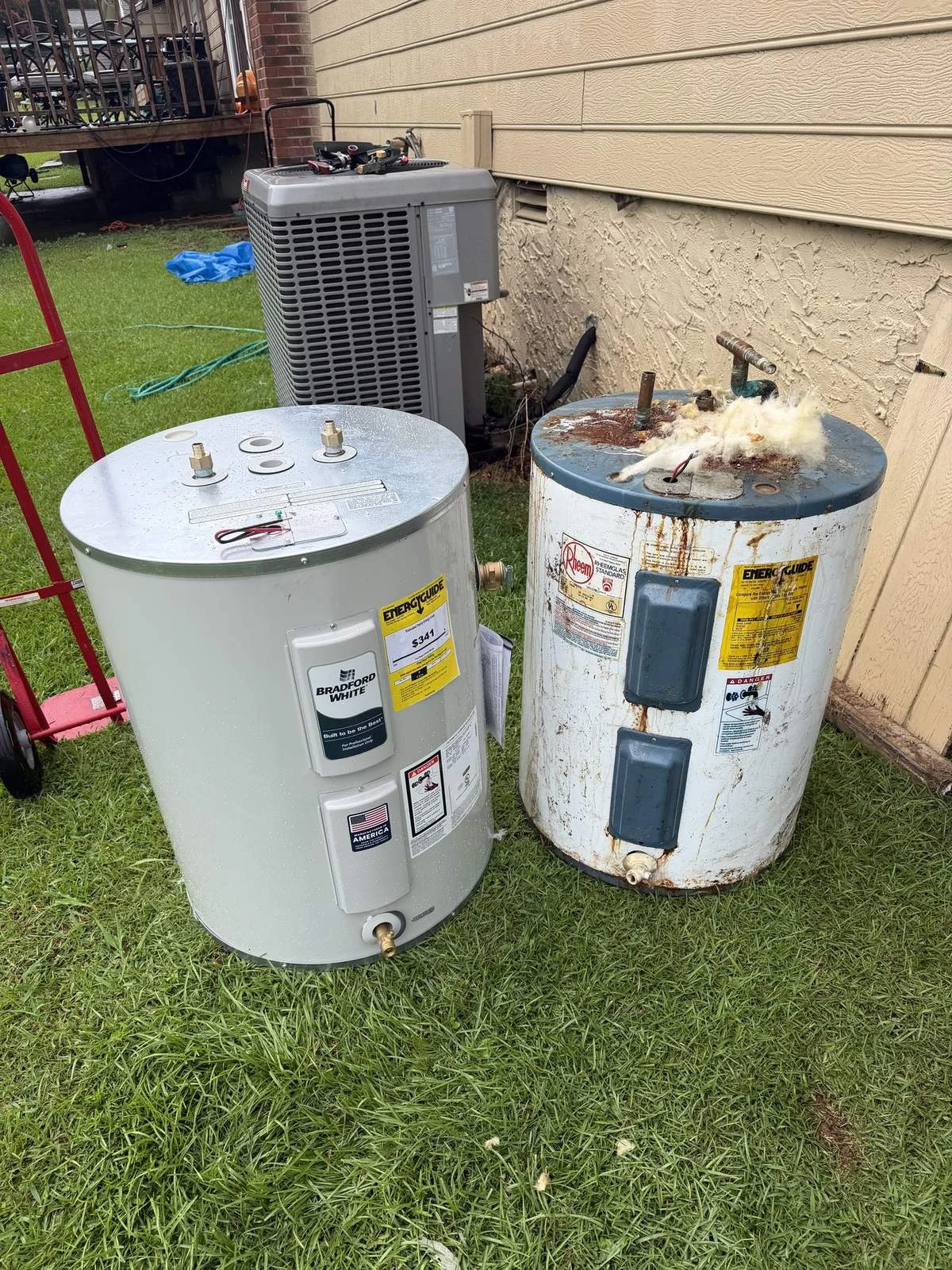
We replace gas and electric tanks of every common size, from Rheem, A. O. Smith, Bradford White and others, and we take the old one with us.
- Duke Energy Trade Ally
- Rinnai certified
- Navien certified
Signs your tank is done
- Water leaking from the tank body or a rust line at the bottom seam
- Rusty water from the hot taps only
- Loud rumbling or popping that flushing no longer quiets
- A heater that is twelve years old or more and needs a major part
- Repeated repairs in the last year or two
- Corrosion on the fittings at the top of the tank or around the burner door
Same size, or a different heater
A like-for-like swap, the same fuel and close to the same size in the same spot, is the most common replacement and usually the quickest. Tanks have grown slightly over the years because of efficiency rules, so a new 50-gallon heater can be taller or wider than the old one. In a tight closet we measure before we order.
Some households want more. A family that has outgrown a 40-gallon tank may move to a 50 or a high-recovery model. Others switch fuel, or move to a tankless unit, which is its own job with its own gas and venting requirements.
Gas or electric
Where natural gas is available, a gas tank recovers faster than an electric one, which means it reheats a tank of cold water sooner after back-to-back showers. A standing-pilot gas heater also keeps working through a power outage.
An electric tank needs no vent and no gas line, so it can go almost anywhere with a dedicated 240-volt circuit. Heat pump water heaters are a high-efficiency electric option, but they need room around them and pull heat from the air around them, which suits a garage or a large utility room better than a closet.
We are a Duke Energy Trade Ally. If Duke Energy supplies your electricity and you choose a qualifying heat pump water heater, we can help you get the Duke rebate on it. The rebate amount and the eligibility rules are Duke's, so we confirm them with you before you pick a unit.
Switching from electric to gas means running a gas line and adding a vent. Switching from gas to electric means a new circuit. Either way we walk through what it involves before you commit.
Venting: atmospheric or power vent
Most gas tanks in Upstate homes are atmospheric: hot exhaust rises on its own through a draft hood and a metal vent to the roof or into a chimney. That only works if the vent rises steadily, is the right size, and keeps its clearance from wood framing.
A common trap is the orphaned water heater. When a gas furnace is replaced with a high-efficiency model that vents through PVC, the water heater is left alone in a chimney sized for both, and it may not draft properly. The fix can be a liner or a different venting plan.
Where there is no good path up, a power-vent heater uses a fan to push exhaust sideways through a wall in plastic pipe. It needs an electrical outlet nearby and it does not run without power, but it opens up locations an atmospheric heater cannot use.
The code items we bring up to date
These are the items an inspector checks and an older install often lacks.
- T&P discharge line: the relief valve gets a full-size pipe that runs downhill to within six inches of the floor or to an approved drain, with no valve, no threads at the end and nothing that could trap or block it.
- Drain pan: where a leak would damage the building, such as a closet, an attic or over a finished floor, the tank sits in a pan piped to a safe place.
- Expansion tank: if the house has a check valve, a backflow preventer or a pressure reducing valve, the plumbing is a closed system and the code requires a way to absorb thermal expansion.
- Gas shutoff and sediment trap: a shutoff valve within reach of the heater, and a sediment trap, a short capped drip leg, at the gas inlet to catch debris before it reaches the gas valve.
- Flue clearance: single-wall metal vent connectors generally need six inches from combustibles, and the vent must be secured and slope upward.
- Garage installs: a gas heater in a garage has to be protected from vehicles, and unless the unit is listed as flammable vapor ignition resistant, its burner must sit at least 18 inches off the floor.
How a water heater replacement runs
-
Measure and match
We confirm the fuel, size, venting, space and clearances so the new heater fits and meets code in that spot.
-
Pull the permit
We file with the city or county office that covers your address.
-
Drain and remove
We shut off the fuel and water, drain the old tank, disconnect it and carry it out.
-
Set and connect
The new tank goes in its pan with new water connectors, a new gas connector or wiring, the discharge line, and an expansion tank where required.
-
Fill, fire and test
We fill the tank with a hot tap open to purge air, light or power it, check the gas connections for leaks, and test the vent for draft.
-
Inspection and haul-away
We schedule the inspection, and the old heater goes with us for disposal or recycling.
Not sure this is the problem? Describe what is happening and we will tell you.
(864) 415-7482Permits for a water heater replacement
The City of Spartanburg says any work on a residential property in the city needs a residential permit, and lists water heater installation as minor work that does not need a plan review. In unincorporated Spartanburg County, water heater replacement is permitted as plumbing work through the county's Building Codes office. Cherokee County, and the cities inside it, run their own permit offices.
We pull the permit and meet the inspector. It protects you later, because a home inspector or an insurer may ask whether the heater was installed under a permit, and an unpermitted swap with no expansion tank or a bad discharge line is a common report finding.
What drives the cost of a replacement
Every job is priced before work starts. These are the things that move the number.
- Fuel and size
- Gas or electric, 40 or 50 gallons or larger, standard or high-recovery.
- Venting
- Reusing a sound atmospheric vent is simple. A chimney liner or a power-vent unit adds work and parts.
- Code updates
- An expansion tank, a drain pan, a new discharge line or a sediment trap, if the old install lacked them.
- Location
- A garage swap is easiest. An attic or a tight closet takes more people and more time.
- Fuel changes
- Going from electric to gas needs a gas line and a vent. Going from gas to electric needs a circuit.
- Permit
- The permit fee is set by the city or county.
Why homeowners call Gas Guys for a new water heater
The whole install, not just the tank
Venting, gas, relief line, pan and expansion tank, all brought to current code.
Gas and venting are our trade
Draft, combustion air and gas connections are where gas water heaters go wrong, and they are what we know best.
Permitted and inspected
Paperwork that holds up when you sell the house.
Honest about the options
If a repair makes more sense than a new heater, we tell you.
Duke Energy Trade Ally
Gas, electric or heat pump, and help with Duke rebates on qualifying heat pump water heaters.