Duncan's water comes from the Startex-Jackson-Wellford-Duncan Water District, treated at its plant in Lyman. SJWD reports its water as extremely soft, generally around 6 to 8 milligrams per liter of hardness. That is about as gentle on a water heater as public water gets, at least as far as scale is concerned.
Soft water cuts both ways, though. It leaves little mineral scale, but it can use up a tank's sacrificial anode rod faster. Once the anode is gone, the steel tank starts to corrode from the inside, and that, not scale, is what usually ends a heater's life here.
Gas tanks in Duncan run on Greer CPW natural gas. Inside town limits, replacements are permitted and inspected through the Town of Duncan. We handle the permit, the install and the haul-away.
Many of the town's homes were built in the last couple of decades, which means a lot of original tanks are reaching replacement age at once, in attics and garages all over the newer subdivisions.
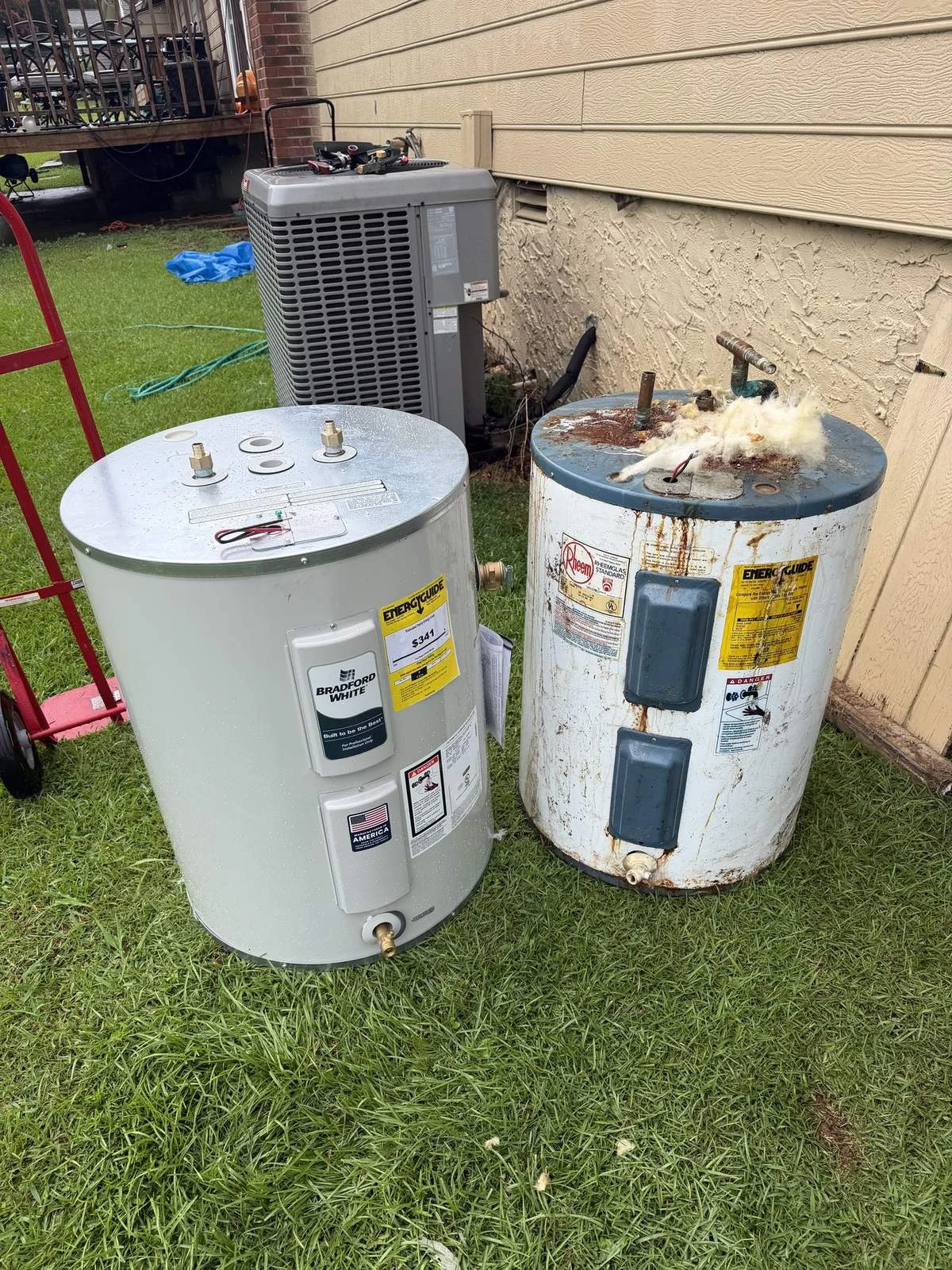
Very soft water and the anode rod
An anode rod is a metal rod, usually magnesium or aluminum, that corrodes in place of the tank. In very soft water it can wear away sooner than you might expect. When it is gone, the glass lining's small flaws are left unprotected and rust begins.
When we install a new tank, we show you where the anode sits. Checking it every few years and replacing it when it is worn down to the core wire is the cheapest way to get more years from the heater.
A rotten-egg smell from the hot water only, not the cold, is sometimes a reaction between a magnesium anode and the water. If you notice it after a replacement, tell us; a different anode material often solves it.
Attic heaters
A lot of Duncan homes put the water heater in the attic. When an attic tank fails, the water comes through a ceiling. That is why the pan, its drain line and the tank's age matter more here than in a garage.
- A pan under the tank with a drain line to a safe place, not just a pan
- A relief valve line that runs where it should and ends where it should
- A clear path from the hatch to the heater for removal and replacement
- A shutoff on the cold line you can find in the dark
Tank or tankless
Switching to tankless is a common upgrade in Duncan, and very soft water is in its favor, since scale buildup in the heat exchanger is a smaller concern than in hard-water areas. The catch is gas supply. Many tankless units need several times the gas of a tank, and the line from the Greer CPW meter often needs to be larger.
A tankless install also changes the venting. We lay out both options side by side, tank replacement and tankless conversion, so you can decide with the whole job in view.
Garage tanks and fuel choices
Garage installs are the easy case for a replacement: room to work, no ceiling below and a short path for the old tank. They are also the best spot for a heat pump water heater if you are on electric and want lower running costs, since a garage gives the unit the air volume it needs.
If you are on gas and want to stay that way, a like-for-like tank is usually the quickest swap. We confirm the new tank fits the space, the vent and the clearances before it comes off the truck.
Permits through Town Hall
Duncan has its own building official, and water heater replacements inside town limits are permitted and inspected through the town. For homes outside the town line, the permit comes from Spartanburg County Building Codes. We confirm which applies and file it.
The inspection protects you later. When you sell, a buyer's inspector looks at the relief line, the pan, the venting and the gas connection, and a permitted install with a passed inspection answers most of those questions before they are asked.
In Duncan specifically
Greer CPW gas
Gas water heaters in Duncan run on Greer CPW natural gas. A larger appliance may need a meter review by CPW, which runs on their schedule.
Garage installs
A gas heater in a garage needs protection from vehicles and, unless it is listed as ignition resistant, its burner at least 18 inches off the floor.
PEX near the flue
Many newer homes are plumbed in PEX. Manufacturers call for keeping it away from a gas heater's flue and the first stretch of hot pipe, so we use metal there.
Older homes in town
Houses near Main Street may have galvanized pipe at the heater. Dielectric fittings keep the new connections from corroding where metals meet.
How a water heater replacement runs
-
Measure and match
We confirm the fuel, size, venting, space and clearances so the new heater fits and meets code in that spot.
-
Pull the permit
We file with the city or county office that covers your address.
-
Drain and remove
We shut off the fuel and water, drain the old tank, disconnect it and carry it out.
-
Set and connect
The new tank goes in its pan with new water connectors, a new gas connector or wiring, the discharge line, and an expansion tank where required.
-
Fill, fire and test
We fill the tank with a hot tap open to purge air, light or power it, check the gas connections for leaks, and test the vent for draft.
-
Inspection and haul-away
We schedule the inspection, and the old heater goes with us for disposal or recycling.
The full guide to water heater replacement, and everything else about plumbing and gas in Duncan.