Boiling Springs grew fast, from about 4,500 people in 2000 to more than 10,400 in 2020, and most of its homes went up during that run. That means a great many houses here are on their first or second water heater, and whole streets of tanks are reaching the end of their lives around the same time.
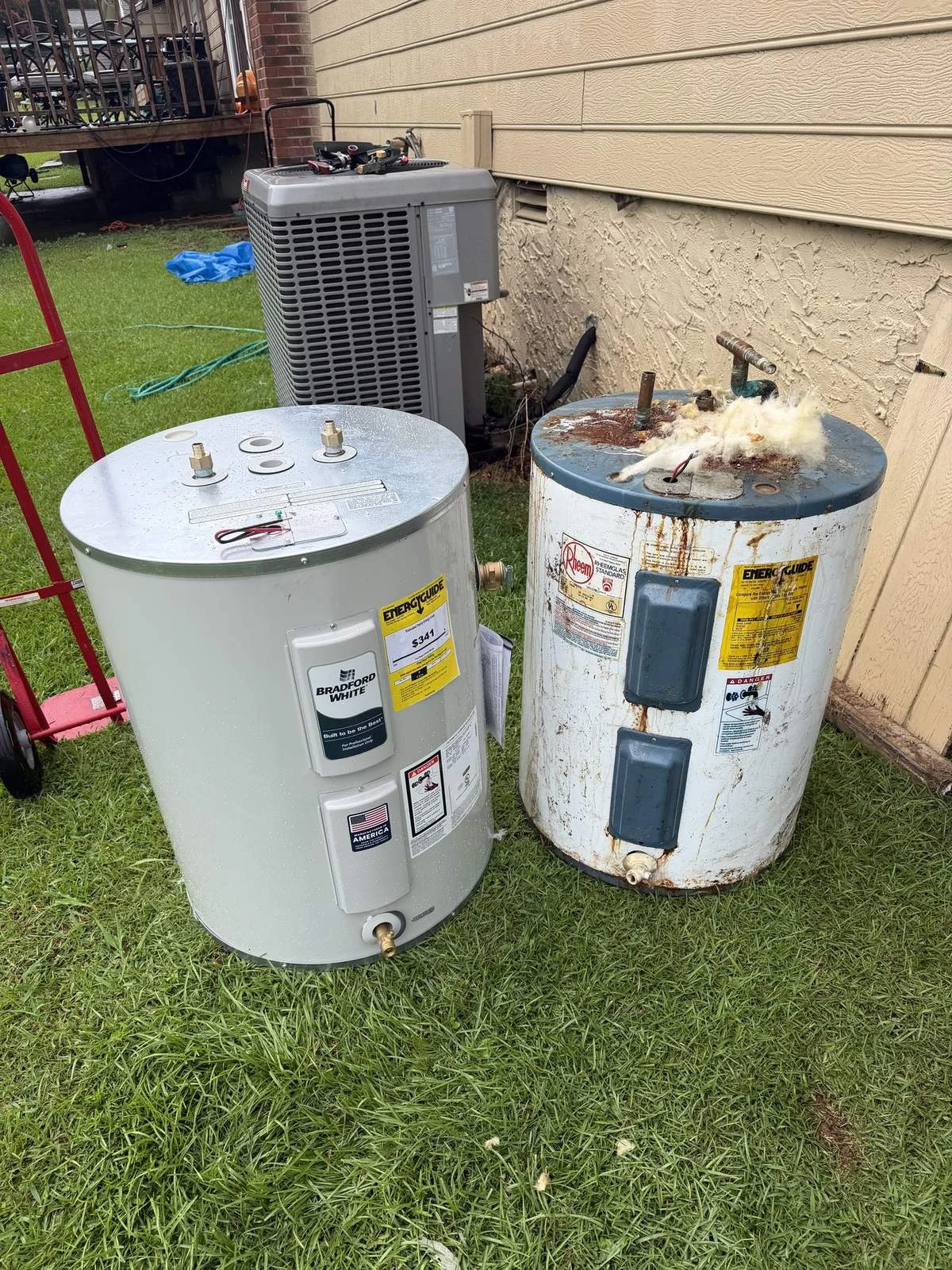
A standard tank typically lasts somewhere around 8 to 12 years. If your house was built in the mid-2000s and still has its original heater, it is living on time. Rust at the base, water in the pan, or a rumble when it fires are the signals to plan a replacement instead of waiting for a flood.
We replace gas and electric tanks in garages, closets and attics, bring the installation up to current code, and file the permit with Spartanburg County Building Codes, since Boiling Springs has no town building department.
Garage and attic installs
Builders in the area put water heaters in two main places: the garage, where they are easy to reach, and the attic, where they save floor space. Each has its own requirements.
In the garage, a gas heater's burner has to sit at least 18 inches off the floor unless the unit is listed as flammable vapor ignition resistant, and it needs protection from vehicles. In the attic, the tank must sit in a pan with a drain line to a safe place, and there has to be a clear path to carry it in and out.
What builders often skipped
Original installs from the boom years were done quickly, and some of them would not pass an inspection today. These are the items we see missing or wrong most often, and the ones we correct during a replacement.
- Attic pans with no drain line, or a drain line that ends in the attic
- Relief valve discharge lines that run uphill or end too high
- No expansion tank on a house with a pressure reducing valve
- No sediment trap at the gas inlet
- PEX run tight against the heater's flue or the first stretch of hot pipe
Soft water and a quiet tank
Spartanburg Water serves Boiling Springs, and its water is generally soft. Less mineral sediment means a tank stays quieter and loses less efficiency over time. The anode rod still wears away as it protects the steel, so it is worth checking every few years.
If your home is on a private well rather than public water, the water chemistry could be quite different. Tell us when you call, because it changes what we look at.
A yearly flush still pays off on soft water. It clears what sediment does collect and gives you a regular look at the tank, the relief valve and the connections before a small drip turns into a soaked garage.
Planning the swap before it fails
An emergency replacement is limited to what is on the truck and what fits through the attic hatch that night. A planned one lets you choose the size, the brand and the efficiency, line up a garage that is not full of water, and fix the venting or pan drain without rushing.
If your tank is past ten years old and showing any warning signs, a planned replacement on a weekday is usually the calmer path. We can look at it and give you a straight answer on how urgent it is.
Gas, electric, or a switch
Whether you can have a gas heater depends on what is at the street. Homes with a Piedmont meter can stay gas or switch to it. All-electric homes without a main can stay electric or use propane. A heat pump water heater is another electric option and fits well in a roomy garage.
A switch from electric to gas means a sized gas line and a vent; a switch to tankless means a much larger gas supply. We lay out what each involves before you decide.
In Boiling Springs specifically
Septic homes and draining
On septic, we drain the old tank outdoors or to a safe spot rather than sending a full tank of sediment-laden water into the septic system.
County permit
Spartanburg County Building Codes permits water heater replacements in Boiling Springs, and a county inspector checks the finished install.
Builder-grade expansion tanks
Some homes got an expansion tank when built, and those tanks wear out too. A waterlogged one does nothing, so we test it during the replacement and swap it if it has failed.
Neighbors on the same schedule
If a neighbor in your subdivision just lost an original tank, yours was probably installed the same year. That is a good prompt to check the date on your heater's label.
How a water heater replacement runs
-
Measure and match
We confirm the fuel, size, venting, space and clearances so the new heater fits and meets code in that spot.
-
Pull the permit
We file with the city or county office that covers your address.
-
Drain and remove
We shut off the fuel and water, drain the old tank, disconnect it and carry it out.
-
Set and connect
The new tank goes in its pan with new water connectors, a new gas connector or wiring, the discharge line, and an expansion tank where required.
-
Fill, fire and test
We fill the tank with a hot tap open to purge air, light or power it, check the gas connections for leaks, and test the vent for draft.
-
Inspection and haul-away
We schedule the inspection, and the old heater goes with us for disposal or recycling.
The full guide to water heater replacement, and everything else about plumbing and gas in Boiling Springs.